Mesozoic Ammonites
Mesozoic Ammonites
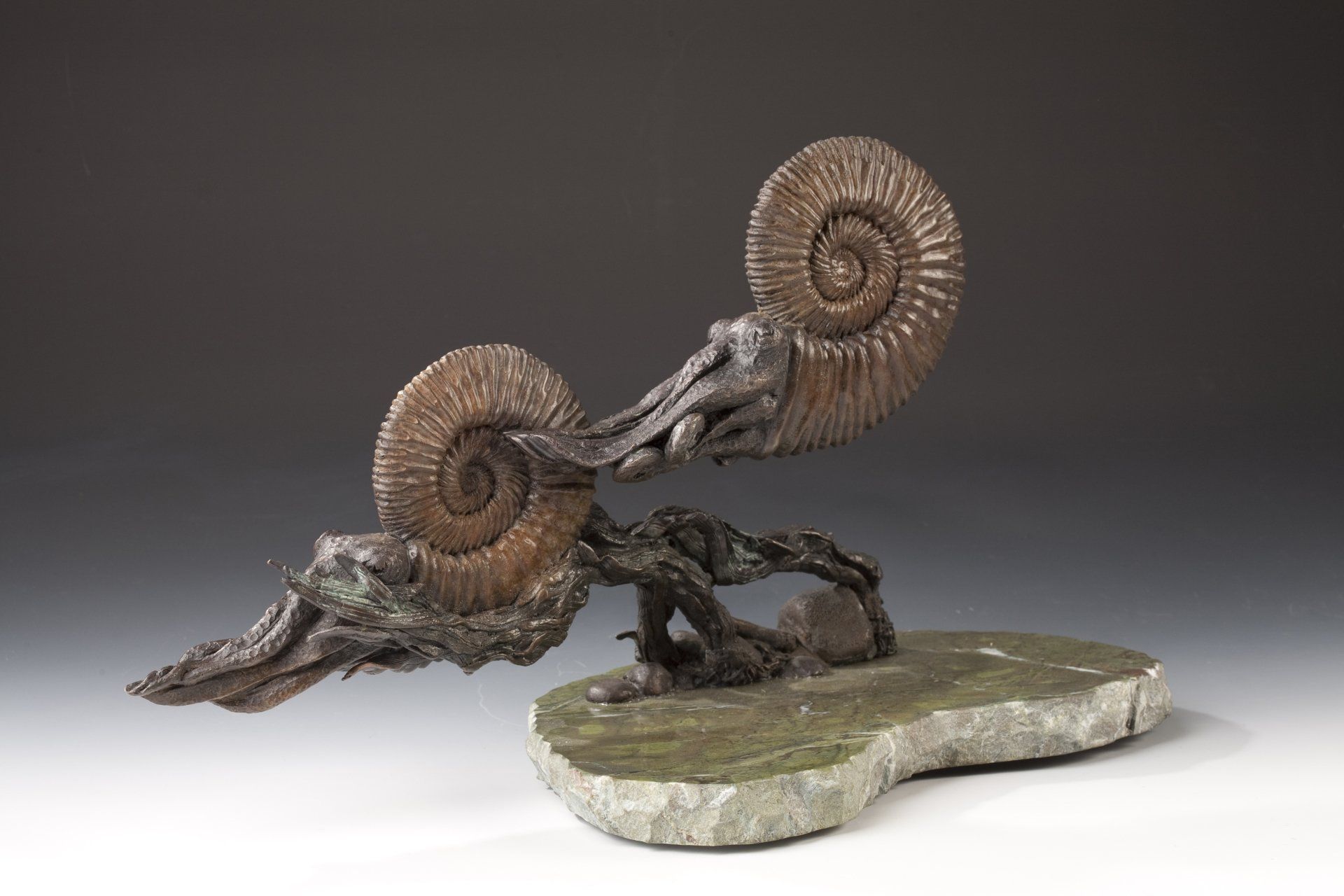
Medium – Cast bronze on a marble base
Dimensions – 12"H X 24”W X 8"D
Limited edition of 25 • $3,200
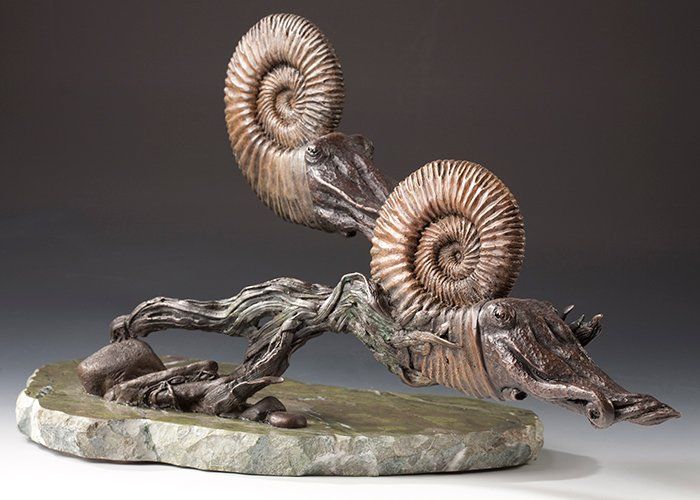
Ammonites are a group of coiled shelled cephalopods that lived in our oceans and seas during the Mesozoic Era. This was during the age of dinosaurs, at least it was on land, but in the oceans it was another story. In the oceans enormous marine reptiles like the ichthyosaur, the mosasaur and plesiosaur ruled. They along with Mesozoic sharks and other fish were the dominant predators of these ancient seas. So, what did they eat? Just like today, in our modern oceans where big fish eat little fish which in turn eat still littler fish the same was true then. One thing that made these seas different than those in our modern world was the presence of ammonites. As mentioned earlier these ammonites are coiled shelled cephalopods but what is a cephalopod?
Cephalopods are mollusks that have legs. The word cephalopod actually means head –foot. These mollusks have tentacles (legs) of varying number radiating outward from around their mouth. Modern examples of cephalopods include the octopus, squids, cuttlefish and the nautilus. As a group they are intelligent, sophisticated predators of other creatures in the ocean like small fish, crustaceans or other cephalopods. They range in size from the giant squid which reaches a length of about 45 feet and the giant pacific octopus with a maximum arm span of about 14 feet down to those species that full grown could easily fit in the palm of your hand. The only living group of cephalopods that have a shell today are the nautiloids but in prehistoric times there existed the ammonites.
Ammonite species number in the hundreds with more discovered all the time. In the Mesozoic seas they were incredibly common and are used by geologist as index fossils, which have to be very common and wide spread for a certain age in earth’s past. Just like the living cephalopods ammonites came in an incredible range of size and shell shapes. Some had streamlined narrow shells that would seem to allow fast movement through the water, some looked to have shells and a body shape that seem to indicate more of a planktonic existence and some with massive shells and size were probably benthic bottom feeding predators.The diversity of body size is also a reflection of the modern cephalopods.Some of the ammonites were small, just fingernail size while others have been discovered with shells 6 feet or more across.Their shells are plentiful in Mesozoic marine rocks but fossils showing the rest of their bodies are almost unknown.
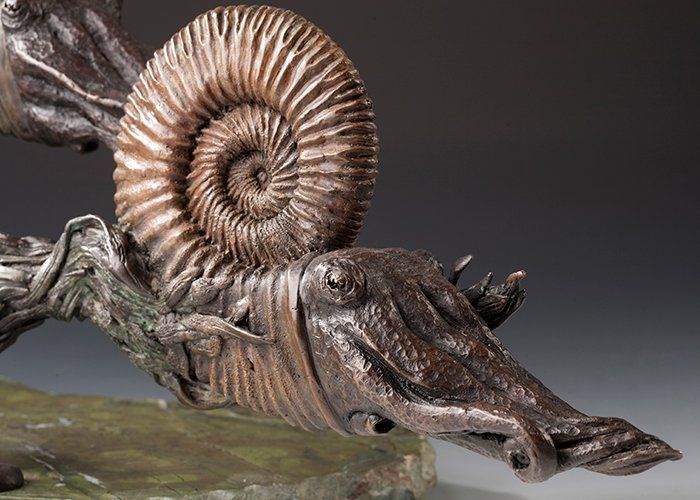
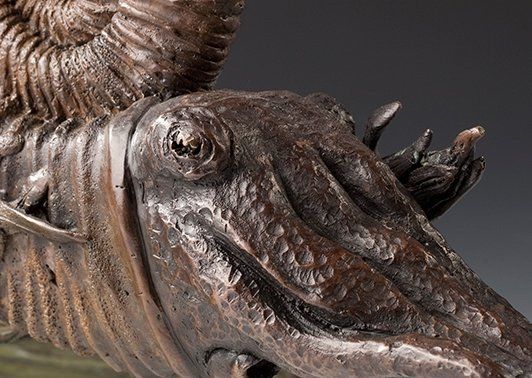
In my sculpture I combined what we know from what did fossilize, (the shell), with what we might only guess at by looking at their close living relatives to create the “living ammonite”. My sculpture shows two individuals, close to the bottom, suspended in a waving bunch of sea weed. The plants would have provided these ammonites with a place of concealment from the large Mesozoic reptiles which preyed upon them as well as a place from which they could pursue their own prey. The sea weed also has a structural as well as artistic role to play in this sculpture. The plant provides a very strong support to the ammonite and holds them off the sculpture’s base while still giving the allusion of their floating above the bottom. This allusion of floating is further enhanced by having one of the ammonites cantilevered out above the other with hidden points of attachment from many of the perspectives taken while viewing this artwork. The sculpture is cast bronze on a marble base.